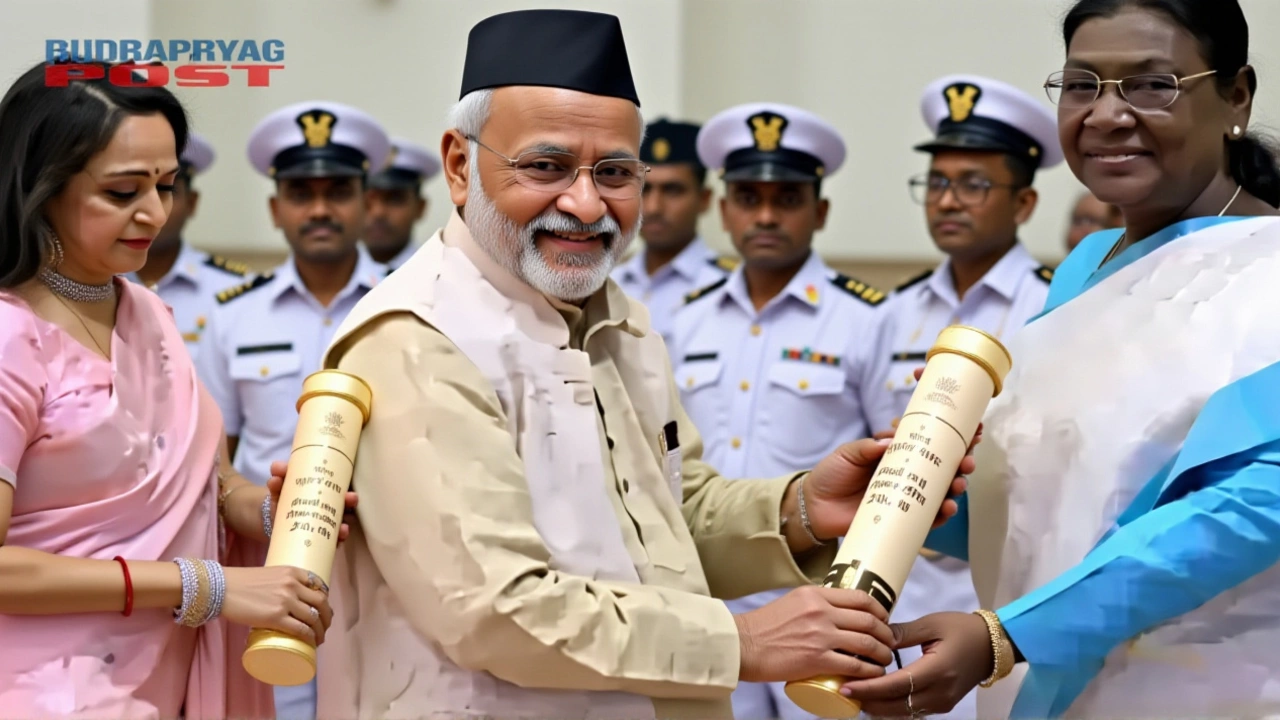
When Droupadi Murmu, President of India, approved the list of civilian honours on January 25, 2026, it wasn't just another bureaucratic announcement. It was a signal that this year’s Padma Awards would break the usual mold.
The Ministry of Home Affairs officially declared 131 recipients for the nation’s highest civilian awards—a number that exceeds the traditional cap of 120. The twist? This isn’t about inflating numbers for show. It’s about recognition reaching deeper into the country’s fabric than ever before, from remote tribal villages to the corporate boardrooms of Mumbai.
Here’s the breakdown: five Padma Vibhushan, thirteen Padma Bhushan, and 113 Padma Shri awards. But the real story lies in who made the cut—and who didn’t.
A Record-Breaking Year for Recognition
Usually, the government sticks to a soft limit of 120 awards per year. But 2026 is different. The decision to go overboard with 131 honors reflects a deliberate shift toward inclusivity. According to reports from All India Radio, the list includes 19 women and 16 posthumous citations. That’s significant. It means the state is acknowledging contributions even after they’ve left us, ensuring legacies aren’t forgotten.
But wait—why does the number matter? Because every award represents a narrative. And this year, those narratives are coming from places you might not expect. Many awardees hail from small towns and indigenous regions, highlighting a move away from metropolitan-centric recognition. It’s a subtle but powerful statement: excellence isn’t confined to big cities.
The Heavyweights: Who Got What?
Let’s talk names. At the top tier, the Padma Vibhushan (the second-highest civilian honor) went to five individuals. Among them are two posthumous recipients: legendary actor Dharmendra and former Kerala Chief Minister V.S. Achuthanandan. Their inclusion underscores the award’s role in celebrating cultural and political pillars of the nation.
In the Padma Bhushan category (third-highest), we see a mix of public service and industry leaders. Shibu Soren, the late Jharkhand leader, received his citation posthumously for public affairs. Meanwhile, Uday Kotak, the banking tycoon from Maharashtra, was honored for trade and industry. Then there’s V.K. Malhotra, also posthumous, recognized for public affairs in Delhi.
These aren’t random picks. Each name carries weight. They represent decades of influence, whether in shaping policy, driving economic growth, or defining cinema.
Sports Stars Steal the Spotlight
If politics and business dominated the higher tiers, sports stole the show in the Padma Shri category. Cricket fans rejoiced when Rohit Sharma and Praveen Kumar were named among the 113 recipients. But it wasn’t just men’s cricket. Harmanpreet Kaur, captain of the Indian women’s team, joined the list—a nod to the growing prominence of women’s sports in India.
Other sporting legends like Baldev Singh, K. Pazhanivel, and Savita Punia also received the honor. While their specific sports weren’t detailed in initial reports, their presence signals a broad-based appreciation for athletic excellence across disciplines.
Beyond the Podium: Science and Social Service
It’s easy to focus on celebrities, but the heart of the Padma Awards lies in unsung heroes. Take A.E. Muthunayagam from Kerala, honored for science and engineering. His work may not make headlines, but it powers the infrastructure we rely on daily.
The list also highlights social workers, educators, and artists from rural backgrounds. As one analyst noted, these awards bring visibility to "silent champions" working in distant corners of the country. It’s a reminder that progress isn’t always loud; sometimes, it’s quiet, consistent, and deeply local.
How Did We Get Here? The Nomination Process
The journey to this list started months ago. Nominations opened on March 15, 2025, with an initial deadline of July 31. But the government extended it to August 15, 2025, allowing more time for submissions. Why? To ensure no deserving candidate slipped through the cracks.
All nominations had to be submitted online via the National Awards Portal. No offline entries allowed. This digital-first approach streamlined the process, reducing paperwork and increasing transparency. Applicants needed to provide up to 800 words detailing their achievements—a rigorous filter to separate genuine impact from self-promotion.
The final vetting involved expert committees within the Ministry of Home Affairs. Only after thorough review did the President give her approval. It’s a system designed to maintain prestige while expanding reach.
What’s Next? The Ceremony Ahead
The first batch of 66 awardees will be honored at Rashtrapati Bhavan in New Delhi during a ceremony at the Ganpathi Mandap. The event, scheduled for Monday following the Republic Day celebrations, marks the beginning of a two-phase distribution. The remaining recipients will be honored in subsequent ceremonies.
This phased approach ensures each recipient gets due attention. It’s not just about handing out medals; it’s about creating moments of connection between the state and its citizens.
Why This Matters Beyond the Headlines
The Padma Awards have been around since 1954. Over seven decades, they’ve evolved from elite recognitions to broader celebrations of merit. This year’s list reflects that evolution. By including more women, posthumous citations, and rural voices, the government is redefining what ‘national contribution’ looks like.
For ordinary Indians, these awards serve as inspiration. They prove that talent doesn’t need a zip code. Whether you’re coding in Chennai, farming in Punjab, or teaching in a tribal school, your work can resonate nationally.
Frequently Asked Questions
Who are the most notable Padma Vibhushan recipients in 2026?
The five Padma Vibhushan recipients include legendary actor Dharmendra and former Kerala Chief Minister V.S. Achuthanandan, both honored posthumously. These awards recognize exceptional and distinguished service to the nation, making them the second-highest civilian honors in India.
Why were more than 120 Padma Awards given this year?
While the traditional guideline suggests limiting awards to 120 per year, the 2026 list exceeded this with 131 recipients. This increase was driven by a push for greater inclusivity, particularly recognizing posthumous contributions and individuals from underrepresented regions, including rural and tribal areas.
Which sports personalities received the Padma Shri in 2026?
Cricket stars Rohit Sharma and Praveen Kumar, along with women’s cricket captain Harmanpreet Kaur, were among the Padma Shri recipients. Other athletes like Baldev Singh, K. Pazhanivel, and Savita Punia were also honored, reflecting a diverse recognition of sporting excellence across various disciplines.
How can someone nominate a candidate for the Padma Awards?
Nominations must be submitted exclusively online via the National Awards Portal managed by the Ministry of Home Affairs. Candidates require a detailed citation of up to 800 words outlining their achievements. The nomination window typically opens in March and closes in mid-August, though dates may vary annually.
Where and when will the Padma Award ceremonies take place?
The ceremonies are held at Rashtrapati Bhavan in New Delhi. The first phase, honoring 66 recipients, took place shortly after the Republic Day announcement on January 25, 2026. The remaining awardees will be honored in subsequent phases later in the year.